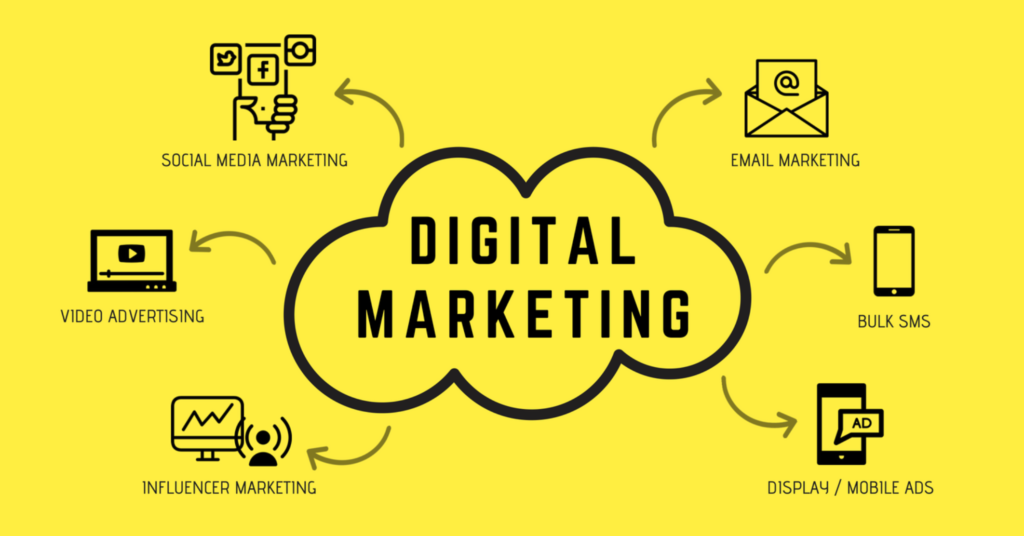
Digital marketing is the promotion of brands, products, or services using internet-based technologies, including social media, search engines, websites, email, and mobile apps. It enables precise audience targeting and real-time performance tracking to optimize campaigns for better engagement.
Core Steps of the Digital Marketing Process
- Define Goals & Objectives: Establish what you want to achieve (e.g., increasing website traffic, generating leads, or boosting sales).
- Use the SMART framework to ensure goals are Specific, Measurable, Achievable, Relevant, and Time-bound.
- Identify Your Target Audience: Create detailed buyer personas based on demographics (age, location), behavior (purchasing history), and pain points.
- This ensures your messaging resonates with the right people on the platforms they actually use.
- Conduct Research & Analysis: Perform a SWOT analysis (Strengths, Weaknesses, Opportunities, Threats) and a competitive benchmark.
- Analyze your competitors’ digital tactics, content strategies, and ad campaigns to find ways to differentiate your brand.
- Select Digital Channels: Choose the right mix of channels based on where your audience spends their time.
- Search Engine Optimization (SEO) for long-term organic growth.
- Pay-Per-Click (PPC) for immediate targeted traffic.
- Social Media Marketing for community building and engagement.
- Email Marketing for direct lead nurturing and customer retention.
- Develop Content & Branding: Create high-quality, relevant content (blogs, videos, infographics) that addresses your audience’s needs.
- Ensure a consistent visual identity and brand voice across all touchpoints to build trust and recognition.
- Set Budget & Allocate Resources: Determine your financial limits and decide whether to handle marketing in-house or outsource to an agency.
- Allocate budget based on the expected ROI (Return on Investment) for each channel.
- Execute & Launch Campaigns: Coordinate the launch of your initiatives across selected platforms.
- Use a content calendar to manage publishing dates and team responsibilities.
- Monitor, Analyze, & Optimize: Track Key Performance Indicators (KPIs) like conversion rates, click-through rates (CTR), and website traffic.
- Use tools like Google Analytics to gather data and perform A/B testing to refine your strategy